
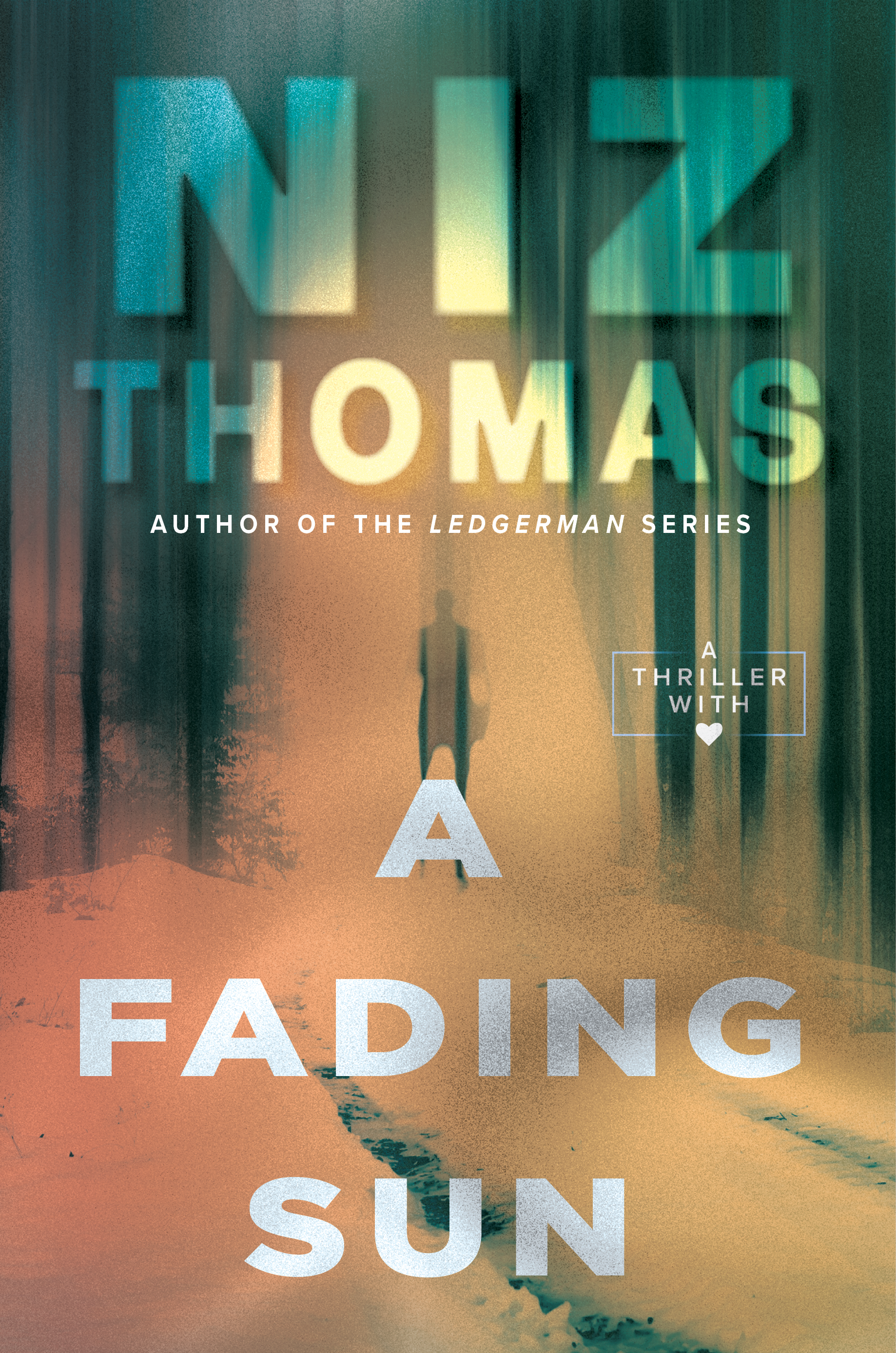
A Fading Sun
A Short Story by Niz Thomas
A new and powerful wind moaned through the fir and ash trees at the top of the trail’s rise, scattering accumulated snow in a chaotic display, and somehow bringing forth a thicker, more ethereal fog from somewhere below, as if to signal to Rosa that it was now, finally, time to go.
Or perhaps threatening her with a presage of what was yet to come if she didn’t.
Thanks, forest, she thought. Truly, truly helpful.
The wind brought with it a new chill to an already cold dusk, one that trapped the breath in Rosa’s throat and forced her to swallow air so cold that it seemed to get inside her throat and esophagus like a feral, clawed animal with no other options but to fight.
It seemed to warn her, for the first time since Rosa had gotten lost and the snow had started falling in earnest, that her time here was running out.
One way or the other, she would soon be rid of this place.
The uncaring, indifferent nature preserve that must have stretched for dozens of miles in every direction, of course said nothing about how she might leave from this place. Nor which direction would be best.
But a new howl of the wind coming up both sides of the ridgeline she’d climbed atop rattled the bare branches on the surrounding trees as if to remind her that there was another way to leave this place. One which would be far more permanent and less pleasant than the alternatives.
Against this wind, Rosa huddled down, trying to stay low to cut her own surface area, the snowy staccato like gunfire sprayed against her winter parka. Thankfully she was dressed for this occasion. Prepared for what she thought were the likely elements of light snow and cold temperatures as she engaged in one final moment of intimacy with the husband who had made most of her life truly magical.
Until he went and died.
Not that she blamed her dear Tony for that. But it was still a very hard pill for her to swallow.
And who, if things didn’t change drastically for her, she would soon be reunited with.
Cold temperatures had turned out to be correct.
It was the light part of snow that really threw a wrench into her plans.
Everything around her was as alien as if she found herself living on another planet. Massive, gnarled-looking trees that, in spring, would call to mind the true beauty of nature were today, amidst the snow and the howling wind, like haunted scarecrows—cragged, bent, and swaying with such force in the cold wind that Rosa felt she could hear their very fibers screaming in agony from the pressure exerted against them.
As if she weren’t already scared out of her mind.
She had been hiking for nearly two hours now after losing her way. What little of the sun visible behind oyster ink-soaked cotton ball clouds seemed to plummet toward the horizon far faster than it made any sense for the light to go away to hide. But perhaps even the sun was getting cold out here. Rosa sure as hell was.
But she was reinforced by her parka. For now. Though she had noted in the past fifteen or so minutes that some of the trees were beginning to form icicles at the ends of their sweeping branches.
As if falling snow, plummeting temperatures, and lack of food and water wasn’t enough to worry about.
Now the damn trees had weapons, too.
“You know, Tony,” Rosa said, continuing an ongoing conversation with her late husband, one which had started thirty-five years earlier and had never once abated in all the years since—one in which she was determined would continue for the rest of her life, “you’re not going to believe the bind I’ve gotten myself in now.”
Tony, unfortunately, could no longer answer her with a quiet, dry quip. He was never much of a talker, but he was the most sarcastic and funny man Rosa had ever known. And it would be just like him now to say something that could make her laugh out loud and feel like the whole world wasn’t collapsing around her.
But just like every day since Tony had passed away from lymphoma, that sense of collapse, that closing in of life’s heaviest of pressures was never far from Rosa’s awareness.
And those were the days when she wasn’t alone, lost in the woods, covered in snow and probably ice.
Kneeling as she was now, at the top of the ridgeline, Rosa could see that her situation over the past two hours had not really improved very much. Her feet ached, and were starting to go numb, the snow leeching what little heat her old boots could provide. Her legs felt weak and unsteady beneath her, not used to this much of an uphill climb in bad conditions.
But worst of all, she sensed—tried to ignore, but it was impossible—that the level-headedness with which she’d approached this problem of being lost was fading.
Was it hard to breathe? Or was she just nervous? Hyperventilating? Each breath now seemed to sting her windpipe and run fingernails along the inside of her lungs. Her breathing labored. Constricted.
It wasn’t altitude. She wasn’t up that high. This was New Jersey, not Everest.
She’d come up, though, thinking that altitude would afford her a better view. Maybe give her an idea of which direction to go. But getting here had been difficult and taken longer than she’d expected.
And standing up here now, she realized that the heavy fog and constant displacement of snow made it so she couldn’t see very much beyond this point at all.
She could see west, though. There was the very faintest of sunlight still visible that way. Not that it did her much good to know which direction it was. It wasn’t as if she could start heading that direction and know that, eventually, she’d hit another state. California would be nicer this time of year for sure. Less of a pain in the ass with the snow and everything. Probably was only a few months’ walk from here, too.
“You know, Tony,” she said out loud, the vapor from her breath further obscuring her ability to see, “if you wanted me to join you in Heaven, I’d have preferred you not trick me into dying. Asking me to bury your ashes out here on your birthday was something I was willing to do. But I would have preferred if you arranged for me to be pushed overboard on a cruise down in the Caribbean or something.”
It had been a strange request from her husband. To have his ashes spread out here, just off the beaten path of one of his favorite hiking trails. He was an avid hiker, and this route, which was only a thirty-minute drive from their home, was one of his go-to spots. Said the path brought him peace like other hikes couldn’t.
“Because it gets you away from your gabbing wife?” she had joked with him once.
He had shaken his head no. “Because it’s solitary. And the sunsets there beside the babbling brook are absolutely divine, Rosa. Hardly anyone else goes out there for some reason. It’s not as well maintained, as far as hiking trails goes. A bit rough going for parts.”
At the time, Rosa thought it sounded sort of exciting, even if she didn’t herself want to partake in it.
Now, though, it sounded downright terrifying. People hardly came here in spring. In a snowstorm, she had no shot at seeing another living soul out here.
“Oh,” Tony had added with the tight smile Rosa knew meant some snark was coming, “and while my wife doesn’t gab that much, it’s really my girlfriend who I can’t stand and need to get away from. She doesn’t know when to shut up.”
Rosa laughed at that one. Even now. She punched the air with her gloved hand, imitating what she might have done if he’d been here with her. Tony had never once cheated. Rosa was certain of that. He was as honest a man as had ever lived. But it was sort of a running joke between them. They each had a “boyfriend/girlfriend” that they could complain about.
“Help me out here, Tony,” Rosa said, the smile fading from her face as another gust of wind crested the hill. Her cheeks were frozen, lips nearly stuck to her teeth from the smiling. And she was starting to feel the clawing of desperation inside her trying to break free.
Just as he had for the past five months, Tony stayed silent in the aether.
And just as she had done for the past five months, Rosa hung her head in quiet grief and trudged forward.
Going back the way she came was an option—though she had been lost to begin with, so there was no guarantee that going back would do her any good. It could actually put her deeper into the surrounding woods, rather than farther away.
She had very little in the way of supplies with her. No food, no shelter. Just a bottle of water which had spilled inside the small backpack she wore, dripping all over her cell phone and then freezing, rendering the water undrinkable and the phone useless. The only other thing she had was the tiny cigar box—one of Tony’s heirlooms from his father—that she used to transport his ashes out here. A strange container, certainly, but Tony’s request had been as specific as it had been strange. The cigar box had somehow eluded the spilled water, though it was now empty, and, therefore, completely useless. Not that Tony’s ashes had been much help. In fact, it wasn’t farfetched to say they were the cause of this whole thing in the first place.
It would be dark soon, and Rosa shuddered to think of what might follow. Bears? Coyotes? Did wolves live in the forests of New Jersey?
Goosebumps ran in waves up and down her arms and all along her back. She was still on one knee and surrounded by snow which seemed to be climbing higher with each passing moment.
It was time. She knew this to be true.
But time for what, exactly?
“Any ideas, Tony? You’re the only one who knows this place.”
Whatever happened, Rosa needed to get back to the parking lot where she’d left her car. Then back home, ready to put this entire ordeal behind her.
Somewhere off in the distance was a low, resonant hooting sound. At first, Rosa thought it was an owl—such a gothic impression. Though not surprising given the tenuous grip she was already losing on the situation.
But after it hooted again, she realized it was a train. Somewhere far off in the distance, the sound reverberating around the bare, snow-covered forest such that Rosa had no hope of making out the source. She had passed a New Jersey Transit station a few miles away from the road into the forest, the one which led her to the parking lot where she’d ultimately left her car. If she could find the train, it would give her some path of guidance. Even if it wasn’t the same train that she saw, which would be close to where she parked, following train tracks would eventually lead her to a station. Or a road.
She searched the surrounding sky, hoping against hope for a smokestack rising above the rest of the landscape.
But the sky was blotted with clouds, and the wind blew so much snow off trees, bushes, and off the ground itself, that it was like picking out a needle in a smokestack.
Tony would have liked that one, she thought.
Another blow of the train’s whistle, though, spurred Rosa to action. She needed to explore this option as far as she could, since she was starting to run out of options entirely.
She stood, walked toward the western edge of the ridgeline, which was only about thirty yards across where she now was. She ducked beneath long, stony fingers of a tree as it shook against the wind, as if it were reaching for Rosa, wishing to pluck her from the earth and eat her whole.
Ahead of her, the little bit she could see through the snowy static kicked up from the wind showed her nothing of value below her in the valley on this side of the ridgeline. There were more trees—hordes of them, actually. But they were covered in the metric tons of snow which had fallen already and showed no openings or clear pathways along which Rosa might walk.
Another hoot from the train in the distance, far fainter now. As if the train was moving away from her rather than toward. lower in volume.
And behind her.
Toward the other side of the ridge.
Rosa turned, moving as quickly as her slowly freezing body could move.
Another gust of wind blew toward her now, from the direction she wanted to go.
It stretched the long, gnarled fingers of the tree under which she’d ducked, sending a blast of icy, clumped snow directly at her face. The cold and wetness of it was shocking to her, even despite the fact that her face was going numb from all the wind. She was temporarily snow-blinded.
Reaching up, wiping along her face and brow line, Rosa heard the groaning of the big tree, as if the pulpy insides were truly at their breaking point as the branches reached, stretched, yearned for her.
She stepped back from its grasp, the wind pushing her.
But there was nothing behind her.
Rosa lost her footing. Her back foot slipped along the snow, the soft crunch of it compressing underfoot before giving away entirely sounded like a gunshot going off.
Rosa reached out but found nothing to grab hold of. The tree, it seemed, didn’t want her as bad as it seemed.
Her balance was going the wrong way. Her back leg slid further down making it impossible for her front leg to find any purchase on the snow. Instead, it was as if a weight had been tied to her and thrown over the edge of the ridgeline. An anchor. Pulling her backward. Down.
Rosa tried to tense her front leg, to root it in place.
When she looked up, the tree that had startled her had stopped moving. Like a schoolboy who pranked someone, injured them, and stopped dead in his tracks, wide-eyed, nervous that if he moved again, someone would know what he’d done.
Then the tree was gone. Replaced only by grey sky.
And then by white.
And, as she tipped, as she shut her eyes and clenched her body against the tumult of blows she was surely to receive, Rosa finally lost the feeling of gravity that had kept her held in place on the ground.
It felt like thirty-five years of marriage that went poof, gone in just a matter of six aggressive months of an intruding illness that invaded her marriage.
Only, it seemed, there were more bumps along the way.
The first full rotation seemed to happen in slow motion, Rosa sensing that her arms involuntarily shot out in front of her—what was really over her own head in an attempt to slow down her fall down the side of the ridgeline. But they were quickly crushed from the force of her body as it tumbled. Somehow her neck didn’t break, though it did take a blow somewhere at its base—a blow that sent a shockwave of numbness down (up?) her back like analgesic lightning strikes. Her legs were weighted, whipping over her turned-to-the-sky hips like medieval catapults, propelling her farther downhill, turning the whole of her back through the spin cycle another time.
There was a time when she skied. A much younger time. Hadn’t done it in years. Before Tony, actually. Before her life, as she seemed to think of it now.
This was called a yard sale, she remembered.
When you took a fall, tumbled down, and lost all your gear along the way.
Rosa wasn’t sure exactly how much gear she’d lost yet.
But as the speed of her tumbling increased, and the impacts got faster and faster, she stopped caring.
Time seemed to speed up.
Eventually, Rosa hit something solid. A tree, maybe. Or even a rock. By then, the numbness radiating up her back had made the impacts only felt by their pressure rather than any pain she might have experienced from them.
Whatever she hit—and she couldn’t make it out, seemed to be drowning in snow now—it shifted her direction and the way her body was tumbling. Instead of going head over heels and backwards she half-tumble, half-slid down a steep bank of snow. So much snow. Enough to take her on a ride above whatever was beneath its accumulation—rocks, roots, small bushes or plants. If the whole ride down from the ridgeline could be like this, Rosa might not have minded.
But nothing was easy. Not since Tony died. And she realized—subconsciously, perhaps, since it all happened so, so fast—that she was no longer sliding atop the snow, but instead riding with it. Less like a moving carpet now and more like a wave. It gained speed and momentum, rising and falling on unseen currents, taking her along for a wild, bitchin’ ride.
Then she realized.
She wasn’t tumbling really.
She was in freefall.
Speeding down the side of the earth like a rocket. Only grazing banks of the snow, which slowed her for a moment.
But at some point, would she hit bottom? Shatter to a hundred million pieces?
Rosa was helpless to do anything now.
A slap against a bank of snow slowed her just enough.
Up ahead, toward the bottom of the side of the ridgeline, Rosa saw what appeared to be evidence of a landslide: uprooted trees bent at scary, dangerous-looking angles, tangled manacles of vines, an entire gulley of rocks so big they could have been detritus from ancient temples.
She knew intuitively that she was headed straight for this mass of chaos. That perhaps, even, the ride on which she now found herself was not the first, but just the latest.
And also that if the sharp, broken tree branches and trunks didn’t get her, the tangles of vines might very well. She screamed against the roar of her stampeding snow wave, knowing it was useless, but wanting very badly—in some deep, primitive part of her—to do something against such an immense power.
There was little else in the scream but emotion. Fear, mostly. At being stuck to death, impaled on a broken branch, sharpened by the elements specifically for her. Or rolling in the nook of some heavy trunk, the vines of a million displaced weeds wrapping themselves around her legs, her trunk, her arms, ensuring that she died trapped in a snowy, tangled grave.
Rosa stuck out an arm that she couldn’t even feel.
She didn’t even know she’d grabbed hold of something until her head snapped forward, down the hill, the base of her neck screaming in pain as the muscles did their darndest to keep her head attached to the rest of her.
Snow poured over her like she’d been dropped into a giant sugar bowl that was being refilled. But it had the cleanest, freshest smell. And its cold tentacles oozed their way into every nook and cranny of her body, finding the middle and lower portions of her back, sticking snow in her underwear, reaching all the way down to the tips of her toes.
She was no longer moving, but the snow wave, or avalanche or whatever still poured over her.
She would not be impaled or vine-hugged to death, it seemed.
Worse.
Perhaps she would be buried under the snow.
Her heart was like a bomb inside her now. Maybe it would be that that killed her instead.
And maybe it was better that way.
She could be with Tony again. Her sweet, loving Tony.
Part of her wanted that, didn’t it? The quiet part inside of her.
Even amidst the roar of snow, she could hear Tony’s quip: “I didn’t realize there was a quiet part of you.”
She laughed then. Out loud. As if she weren’t about to be pummeled by the elements.
Her mouth filled with snow. Choking her. The snow so cold … so entirely packed into her stupid open gullet … so …
At least she would go out laughing at one of Tony’s jokes. She didn’t care if it was imagined. It felt genuine. Real.
More snow piled then. Onto her face, her eyes. Her mouth.
Rosa’s body spasmed. Call it involuntary fear of death. She stiffened, her muscles reacting to some evolutionary instinct. Her arm—caught on whatever, she couldn’t see—pulled her. Hard enough that she thought she could hear the muscles and tendons screaming the way she’d heard the tree’s wooden insides when the wind got going.
The snow stopped.
All of a sudden it was no more. Flurries of it danced around her in the fading light of the falling sun, but it was nothing like the whiteout tsunami she’d just experienced.
Rosa gagged, her eyes stung and started to water. But her body pushed back out the snow, now that it wasn’t being followed by an unstoppable, never-ending force of the stuff.
She spit cold chunks out.
She was still on the hillside, though on a less steep angle than she’d fallen at. Her arm had someone managed to hook to a stripped-bare broken tree trunk that had grown sideways out of the hill.
Rosa hung there, suspended by a combination of the accumulated snow and the trunk, like a puppet on a string.
But she was alive.
Rosa let her arm go slack, sliding only another foot down the snow before once again coming to a stop amidst the powder.
For a long time, she didn’t move. Didn’t do anything but feel the vivace beat of her heart and watch, stunned, as her breath danced around outside of her mouth like she was an elegant French smoker.
“You know, Tony, I mentioned before about how you wouldn’t believe the bind I was in. Well, I think I’ve topped myself.”
If Tony could hear here up in heaven, he didn’t say anything. Not even one of those indiscernible grumbles he was so good at.
Despite the shock of the moment and the premonition of aches and pains that Rosa sensed were on their way, it was perhaps the adrenaline of the moment—or the release of it, now that the fall was over—that made her start laughing.
A little chuckle at first. But once she got going, she couldn’t stop.
The laughter rolled through her from deep in her diaphragm and grabbing hold of her entire body. It wasn’t unlike the unstoppable snow wave she’d just ridden, only this came with a sort of cathartic pleasure that the dire, death-fall had lacked.
Rosa lost control of the laughter then, and it only served to make her laugh harder. Almost involuntary at this point. The feeling spread to her chest, tightening it, then to her back and even her neck, which was already stiffening from the hard impact way up the hill.
She was mobile still, though.
And one look back up toward the top of the ridgeline told her how unlikely that was.
Maybe Tony had been looking after her.
The thought brought with it a dead feeling. She stopped laughing, unable at first to catch her breath.
No matter how funny and ridiculous this situation seemed, it ran her aground into the inevitable conclusion.
Her Tony was dead. Gone. And no matter how much she spoke to him, he was never coming back to hold her, or laugh with her, laugh at her, or make her laugh.
Now it was all she could do to stifle a cry. Hot tears welled up at the edges of her eyes, a dam battered by storms, ready to break.
She breathed in, trying to collect herself, the sharp talons of cold air against her raw throat bringing her back to reality.
She was still lost.
And it was nearly dark.
Could she even stand? Could she walk?
Miraculously for a lady her age, the answer to both questions was yes.
She used her free arm to reach across to the impaling tree. Her right arm had hooked it, but in the aftermath of adrenaline, she sensed that she’d stretched a muscle too far, or perhaps torn something. She could move her right arm, but not easily. And not through a particularly large range of motion.
But she was upright. On her feet, which were entirely covered in the snow.
Rosa knew she hadn’t escaped injury—not entirely. But she was mobile enough to keep going. Which was good, since to stop would have meant giving up. And possibly death.
She very slowly, very carefully, picked her way past the vines and stepped over a few more downed trees.
Extricated finally from the snow wave’s break, Rosa took one last look up toward the ridgeline. It was aglow in the last purple streaks of sun stretching across the sky. And for some reason, it felt like Tony was there with her.
It occurred to Rosa, as she looked up on the place she’d fallen from, that there was only one way for someone to see the sunset the way Tony had described it to her.
They would have to be on this side of the ridgeline. Down the way she’d fallen.
If she was on the other side—if she’d fallen down that side and to the bottom—the sunset would be blocked. There’d be nothing to see. Nothing to enjoy.
“So if you enjoyed a sunset beside a babbling brook before heading home, Tony …” Rosa turned away from the steepness and looked upon the quickly darkening wintry landscape. Though it had seemed an impenetrable canopy from above, down here it wasn’t quite so intimidating. There was the making of a path that curved in front of her and followed the line of the hillside to her left, and then wound away from her to the right. “… and you escaped from this place without dying, that means you would have enjoyed that sunset close to where you parked. Which means you would have been this way.”
Rosa started walking, following the trail to her right.
The sun’s light was practically non-existent now. Only the last remnants of it which still peeked over the edge of the horizon. Down here, away from the gusting winds that had plagued the top of the ridgeline, everything seemed much more tame and less intimidating. As if the whole forest through which she now walked had taken a deep breath before bedtime, after hazing their foolish little lonely traveler, and was now ready to settle in for the night.
Rosa wasn’t sure she would feel the same once the sun finally went away for the night, though.
It took her another few minutes of brisk walking before she heard moving water—as brisk as she could manage with her right arm dangling limply by her side and the aches and bruises which seemed to grow in number with each passing step, anyway.
She worried for a moment that the brook would not be babbling at all in the cold, that it might be frozen over.
But she was lucky, it seemed.
Stopping beside it for a moment, Rosa looked up toward the horizon. Toward Tony’s favorite part of this, his chosen resting place.
The sun was gone. Only the very faintest of glows lit up the line that seemed to separate the earth from heaven. Rosa was overcome with an emotion—one that seemed impossible to name. A sort of hybrid between relief and sadness, jubilation and the darkest depression in the knowing that Tony was really and truly gone.
She longed to go to that line on the horizon. To step across it. To once again see her Tony.
But that was an adventure for another day.
“Where to now?” she asked her husband, knowing full well the silence that met her was the sound of him she would now have to be get used to. It had been five months and it still didn’t feel familiar.
She continued along the path, finally seeing a sign for the parking lot a few hundred feet ahead. The trees seemed to widen, to spread, as if they were opening the doors just before closing time so that anybody still inside the park could leave.
When she saw Tony’s old car, the rugged old Jeep that he brought on all his adventures and fawned over with enough tender care to almost make Rosa jealous, she breathed a single painful sigh of relief—her throat and windpipe still raw and ragged from all the cold air, the jostling as she made the quickest descent ever from the ridgeline, and being stuffed like a turkey with snow and ice.
The Jeep sat amidst the untouched snow of the parking lot like a sleeping puppy, eagerly awaiting in dreamland the return of its owner. It had custom tires that made quick work of snow and mud and even riverbeds, according to Tony.
And while it was about the least practical vehicle to drive around their neighborhood or to run a few errands, Rosa didn’t see any time soon when she could stand to be without the car.
Just like she had been in Tony’s arms all the beautiful years of their marriage, she was safe now.
Finally here.
Eager to get warm again, Rosa trudged across the untouched powder of the empty parking lot, half-expecting to find that her keys had fallen from her pocket somewhere along the way.
Now that would be a funny story to tell Tony.
But they were still zipped inside her inner jacket pocket. Safe and sound.
Rosa unshouldered her pack with great difficulty. Given that her phone was not working, the only thing of any value inside was the cigar box—and even that was not valuable to her in the same way it had been to Tony. It was empty now, her last physical piece of her husband scattered into the great unknown of this place.
“Happy birthday, Tony,” Rosa said, pausing for just one more moment in this place that he’d held so dear.
She knew that if he were here now, he would have liked this last moment of quiet.
And maybe now, up in heaven, he would appreciate it, too.
He was up there, surely, smiling down on her.
And probably about to make some wise crack, too.
Purchase your copy of A Fading Sun here.
Find more Niz Thomas stories HERE or wherever books are sold.
A Fading Sun
Copyright © 2025 by Michael Nisivoccia
Published by Throughplace Publishing
Cover and Layout copyright © 2025 by Michael Nisivoccia
Cover design by Throughplace Publishing
Cover art copyright © erika8213/Depositphotos
This story is licensed for your personal enjoyment only. All rights reserved. This is a work of fiction. All characters and events portrayed in this book are fictional, and any resemblance to real people or incidents is purely coincidental. This story, or parts thereof, may not be reproduced in any form without permission.